Tile Installation in Cincinnati
From the century-old bathrooms of Over-the-Rhine to the fast-turning listings near Hyde Park Square, Cincinnati's tile jobs demand different substrate work than a typical suburban re-tile — and timing it around Ohio's freeze-thaw calendar matters more than most homeowners realize.
Cincinnati's Tile Market: A City of Two Speeds
Cincinnati's tile installation demand splits sharply along its own housing map. With a citywide homeownership rate of just 39.8% and a median household income of $52,909, most requests we get from neighborhoods closer to the urban core lean toward value-conscious ceramic tile in the $2-$5 per square foot range — a single bathroom floor or backsplash job, not a whole-home overhaul. Head out toward Hyde Park or the West Side's larger single-family blocks, where the region's average home price sits at $312,250, and the calculus flips: porcelain and large-format tile in the $4-$20 per square foot range become the norm as owners invest ahead of resale. Cincinnati's overall 19.9% family poverty rate also explains why so many jobs we quote are scoped tightly — a 150-square-foot kitchen backsplash or bath floor priced between $1,152 and $4,032 — rather than the sprawling flooring overhauls more common in wealthier exurbs.
The city's housing stock compounds all of this. Roughly 38.3% of Cincinnati's homes are detached single-family structures, many concentrated in historic pockets like Mt. Adams and Over-the-Rhine where bathrooms were tiled decades before modern waterproofing standards existed. When we pull up century-old tile near these districts, deteriorated substrate underneath is common, which means the job often can't qualify for the simpler "intact substrate" re-tile permit exemption — it triggers full Ohio Residential Code permitting ($50-$500 in fees) the moment plumbing or subfloor repair is needed. That reality, paired with Cincinnati's metro contractor rates running 10-20% above rural Ohio counties, is why so many full tile projects here land at the higher end of the $9,941-$12,020 regional average rather than the low end.
Why Timing Your Cincinnati Tile Job Matters
Ohio's climate doesn't just affect roofing and siding — it dictates tile scheduling too. Cincinnati's January lows average 23.7°F, with hard freezes below 0°F almost every year and about 20.7 snow-day events across a typical winter. Grout and thinset need stable temperature and humidity to cure properly, so scheduling a tile job during a January cold snap near a drafty Walnut Hills rowhouse basement is asking for trouble — cracked grout lines and efflorescence often show up within a single season. The best windows in Cincinnati are late spring (April-May) and early fall (September-October), when indoor humidity is manageable and job sites don't need auxiliary heating to keep mortar beds curing correctly.
The worst stretch is deep winter, particularly for basement-level and slab-on-grade installations common in the multi-family conversions scattered through neighborhoods near Clifton and Northside. Freeze-thaw cycling beneath these slabs accelerates cracking far faster than in milder climates, which is exactly why we push Schluter-KERDI waterproofing membranes on nearly every Cincinnati basement or ground-floor bathroom job — and why heated electric floor mat add-ons, priced between $500 and $1,500 per bathroom, see noticeably stronger adoption in Cincinnati than the Ohio average. Summer is workable but humidity swings near the Ohio River can slow cure times, so we still favor the shoulder seasons whenever a homeowner has flexibility.
See the Transformation
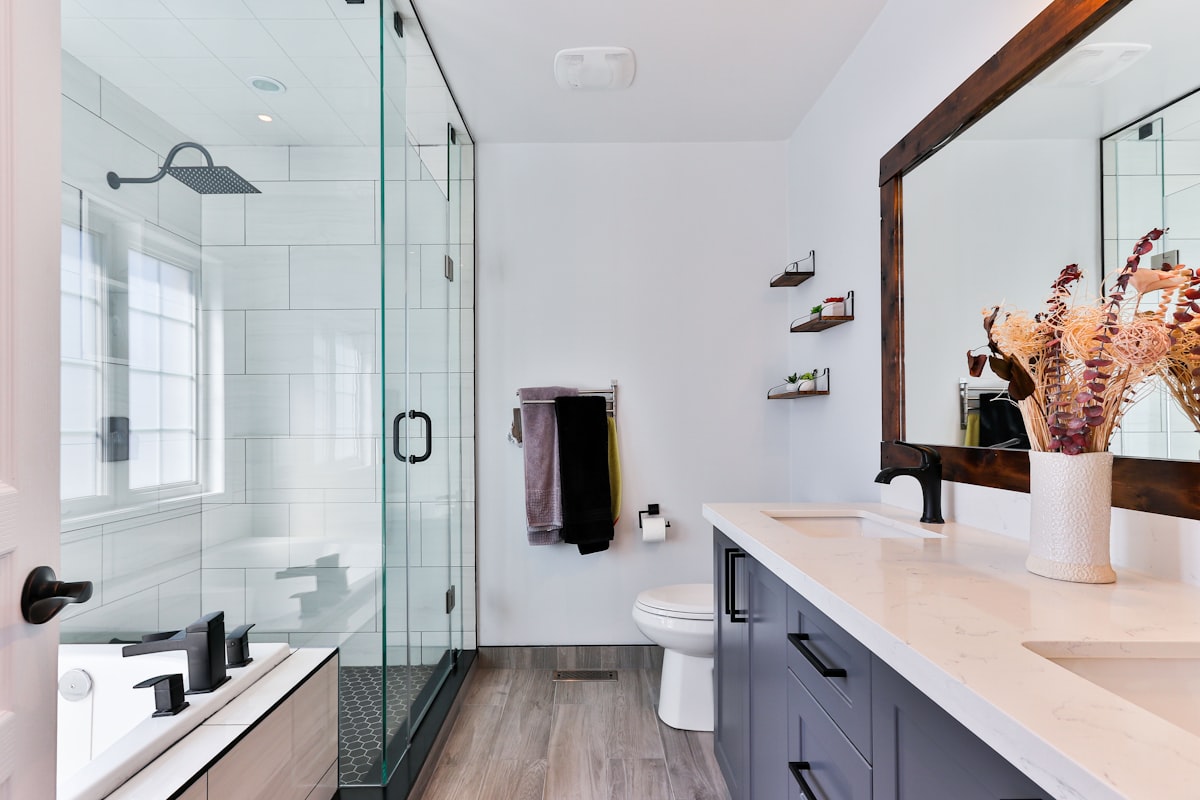
Drag the slider to compare a dated Cincinnati bathroom floor before and after a full substrate rebuild and porcelain re-tile.

Cincinnati Tile Costs & Substrate Realities
Material & Labor Pricing
Ceramic tile jobs across value-conscious Cincinnati neighborhoods run $2-$5 per square foot in materials, while porcelain and large-format tile favored in Hyde Park and similar premium areas climbs to $4-$20 per square foot. A standard 150-square-foot bathroom or kitchen job totals $1,152-$4,032 installed, and full-project averages across the metro land between $9,941 and $12,020 once labor, membrane systems, and finish work are included — reflecting Cincinnati's contractor rates running 10-20% above rural Ohio counties.
Permits & Substrate Rebuilds
Ohio Residential Code permit fees for Cincinnati tile jobs run $50-$500, required whenever plumbing or subfloor repair accompanies the tile work — common in Over-the-Rhine and Mt. Adams properties where deteriorated waterproofing under century-old tile disqualifies the job from the simpler intact-substrate exemption. Always verify your installer is licensed and pulling proper permits; skipping written estimates is a known risk factor in this market's value-tier segment.
Our Cincinnati Tile Installation Process
In-Home Consultation
We assess your Cincinnati property's substrate condition, whether it's a Hyde Park kitchen or an Over-the-Rhine basement bath, and scope for hidden moisture issues.
Permit & Membrane Planning
If substrate repair is needed, we pull the required Ohio Residential Code permit and select the right waterproofing membrane for freeze-thaw protection.
Substrate Rebuild & Tile Setting
We rebuild deteriorated subfloor where needed, then set your ceramic or porcelain tile with proper spacing and thinset coverage.
Grout, Seal & Final Walkthrough
Grout curing is scheduled around stable indoor humidity, then sealed and inspected before we walk the finished space with you.
Recent Cincinnati Tile Projects



Why Cincinnati Homeowners Choose Us
Licensed & Permit-Ready
We handle Ohio Residential Code permits directly, protecting Cincinnati buyers from the unlicensed-installer risk common in value-tier renovations.
Freeze-Thaw Ready Membranes
Schluter-KERDI systems are standard on our Cincinnati basement and slab-level jobs to survive 20.7 annual snow-day cycles.
Scoped, Transparent Pricing
Whether it's a $1,152 backsplash or a full $12,020 renovation, we provide written estimates scaled to your exact project.
Historic Home Specialists
We know the substrate quirks of Mt. Adams and Over-the-Rhine housing stock better than crews used to newer suburban builds.
Seasonal Scheduling Expertise
We schedule cure-sensitive jobs during Cincinnati's stable spring and fall windows to avoid mid-winter grout failures.
Pre-Listing Refresh Experience
We regularly complete fast turnaround tile refreshes for Hyde Park sellers working within a 29-day market window.
Frequently Asked Questions
When is the best time of year for tile installation in Cincinnati?
How much does tile installation cost in Cincinnati?
Do I need a permit for tile installation in Cincinnati?
Why does Cincinnati's climate matter for tile work?
Is ceramic or porcelain tile more common in Cincinnati homes?
What Tri-State Homeowners Are Saying
"Our Hyde Park kitchen backsplash was done in two days flat, right before we listed the house. They flagged a moisture issue behind the old tile near the sink that we never knew about."
"Century-old bathroom near Mt. Adams needed a full substrate rebuild — they explained the permit process clearly and the KERDI membrane has held up through a rough winter already."
"Priced our small Over-the-Rhine bathroom floor exactly as quoted, no surprise fees. Appreciated they scheduled the grout work for early fall instead of pushing us into December."